
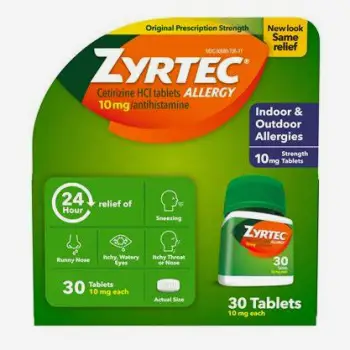
 h2>The short answer: Xyzal or Zyrtec?
Neither medicine is established as universally better. Xyzal and Zyrtec are closely related once-daily oral antihistamines that target the same allergy symptoms, and the more suitable choice depends on how your body responds, whether you experience drowsiness, your health conditions, and practical considerations such as age-appropriate formulations and cost.
Xyzal contains levocetirizine, which is derived from cetirizine, the active ingredient in Zyrtec. That chemical relationship does not prove that Xyzal is stronger or reliably causes less sleepiness for every person. Both products warn that drowsiness may occur, and both advise caution with driving, alcohol, and sedatives. Their US OTC dosing directions differ-Xyzal is taken as 5 mg in the evening, while Zyrtec is 10 mg once daily-but this reflects product-specific labeling rather than evidence that one milligram amount is equivalent to the other.
Individual response varies. Some people find one product more effective or better tolerated than the other, but claims that Xyzal is definitively faster or more powerful are not supported by the evidence available for typical OTC use. The decision often comes down to trial under label directions, medical considerations such as kidney or liver disease, and whether a particular formulation fits your needs.
What Xyzal and Zyrtec have in common
Xyzal contains levocetirizine, and Zyrtec contains cetirizine. Both are H1 antihistamines that work by blocking histamine receptors, interfering with the cascade that produces familiar upper-respiratory allergy symptoms. When allergens trigger immune cells to release histamine, that histamine binds to H1 receptors in the nose, eyes, and throat, causing sneezing, itching, mucus production, and watery eyes. Both medicines prevent histamine from activating those receptors.
Their US OTC labels list the same core uses: temporary relief of sneezing, runny nose, itchy or watery eyes, and itching of the nose or throat associated with hay fever or other respiratory allergies. Both products are labeled for once-daily dosing and marketed as providing 24-hour relief when used as directed. This shared scope reflects their common mechanism and closely overlapping pharmacology.
Both are available over the counter in multiple formulations, including tablets, chewables, and liquids, with product-specific age limits and strengths. Neither requires a prescription for typical adult or pediatric use, and both belong to the same therapeutic class. Their extensive similarities mean that choosing between them often depends on differences in individual tolerance and label-specific cautions rather than fundamental treatment differences.
The key difference between levocetirizine and cetirizine
Levocetirizine is the R-enantiomer of cetirizine. Cetirizine is a racemic mixture, meaning it contains equal amounts of two mirror-image molecules: the R-enantiomer (levocetirizine) and the S-enantiomer. When Xyzal was developed, the manufacturer isolated and marketed the levocetirizine component on its own.
This molecular refinement does not by itself prove that Xyzal will work better or cause less drowsiness for a given person. Enantiomers can differ in how they bind to receptors and how the body processes them, but the presence of the S-enantiomer in cetirizine does not make Zyrtec categorically less effective or more sedating across all users. Both labels warn that drowsiness may occur, and real-world symptom control depends on factors beyond the presence or absence of one enantiomer.
Marketing materials sometimes describe Xyzal as a third-generation antihistamine to distinguish it from cetirizine, but this terminology is not standardized and adds little to the practical decision. Both medicines block H1 receptors with similar profiles, both carry drowsiness warnings, and individual response can vary regardless of the enantiomer composition.
Understanding Xyzal vs Zyrtec
How their allergy relief compares
Both products are labeled to relieve sneezing, runny nose, itchy or watery eyes, and itching of the nose or throat. These are histamine-driven upper-respiratory symptoms, and the two medicines target the same underlying mechanism. Both market 24-hour relief with once-daily dosing, but this does not prove identical benefit in every user.
Claims that Xyzal is universally faster, stronger, or more effective are not supported by evidence applicable to typical OTC use across all ages, allergens, and symptom patterns. Studies comparing the two may show differences in specific populations or settings, but those findings do not establish a winner for everyone. Individual response varies, and some people report better control with one product while others notice no meaningful difference.
Neither medicine addresses every nasal complaint. Congestion, for example, is not primarily histamine-driven, and antihistamines provide limited benefit when blocked nasal passages are the main problem. Both products relieve the itch, sneeze, and watery discharge that histamine causes, but they do not replace decongestants, nasal corticosteroids, or other treatments when additional mechanisms contribute to symptoms.
The choice between Xyzal and Zyrtec for symptom control often depends on personal trial. If one product provides satisfactory relief without troublesome side effects, there is little reason to switch. If neither delivers adequate control, or if drowsiness becomes a problem, reassessment of the treatment plan is more useful than assuming the other antihistamine will solve the issue.
Drowsiness and other side effects
Drowsiness is the most prominent practical concern with both medicines. Xyzal and Zyrtec are second-generation antihistamines that cross into the brain less readily than older drugs such as diphenhydramine, but both US OTC labels warn that drowsiness may occur. Neither product should be described as guaranteed non-drowsy.

Individual tolerance differs. Some people take either medicine without noticeable sleepiness, while others find that even these newer antihistamines cause fatigue or impair alertness. The presence or absence of the S-enantiomer in cetirizine does not reliably predict who will feel drowsy. Both labels advise being careful when driving a motor vehicle or operating machinery, and both caution that alcohol may increase drowsiness. They also warn that sedatives or tranquilizers may have an additive effect.
In 2025, the FDA required warnings about rare but severe itching that may occur within days after stopping long-term daily use of oral cetirizine or levocetirizine. Reported cases were uncommon, but some were serious enough to require medical treatment or restarting the medicine. This warning applies to both products and reflects postmarketing reports rather than a common side effect most users will experience.
Other side effects can include dry mouth, sore throat, or fatigue, but these tend to be mild when they occur. Serious allergic reactions to either medicine are rare. Anyone experiencing difficulty breathing or swallowing should seek emergency medical attention rather than continuing self-treatment.
Dosing, warnings, and safe use
US OTC tablet directions differ by product. For adults and children 12 years and older, Xyzal directions are 5 mg once daily in the evening, with no more than 5 mg in 24 hours. Zyrtec directions for adults and children 6 years and older are 10 mg once daily, with the option to take 5 mg if symptoms are less severe, and no more than 10 mg in 24 hours. These are product-specific label instructions, not evidence that the doses are interchangeable or that 5 mg of levocetirizine equals 10 mg of cetirizine.
Pediatric directions, age limits, and available dosage forms are product-specific. Xyzal and Zyrtec each offer chewables, liquids, and tablets with different strengths and age cutoffs. Directions from one formulation must not be applied to another. Always use the Drug Facts label on the specific product you are giving or taking.
Xyzal's US OTC label says not to use it in people with kidney disease and to ask a doctor before use with liver disease. Zyrtec's label says to ask a doctor before use with liver or kidney disease because a different dose may be needed. These differences reflect each product's labeling rather than a broader safety advantage for one over the other.
Xyzal's label says not to use it after an allergic reaction to levocetirizine or cetirizine. Zyrtec's label says not to use it after an allergic reaction to cetirizine or hydroxyzine. Both labels direct pregnant or breastfeeding individuals to consult a health professional, with wording that should be followed as written.
Do not take Xyzal and Zyrtec together, alternate between them without guidance, or double a dose in an attempt to improve relief. These are closely related medicines, and combining them or creating your own switching schedule can increase the risk of side effects without established benefit. Direct unresolved questions about medication use to a pharmacist or clinician.
How to choose between Xyzal and Zyrtec
The decision depends on prior response, unwanted drowsiness, medical conditions, formulation, and practical factors such as cost and availability. If you have used one product successfully in the past and tolerate it well, there is little reason to switch. If you have not tried either, starting with the product that fits your label-appropriate age, health status, and preferred dosing time is reasonable.

Drowsiness can influence the choice. Some people prefer taking Xyzal in the evening to minimize daytime sleepiness, while others tolerate Zyrtec in the morning without trouble. Neither approach is universally better, and both products can cause drowsiness regardless of when they are taken. If sleepiness becomes a problem with one medicine, trying the other may help, but it is not guaranteed to eliminate the issue.
Medical conditions matter. Kidney disease, liver disease, pregnancy, and breastfeeding each carry product-specific label cautions that should guide the decision. If you have any of these conditions, review both Drug Facts labels and consult a pharmacist or clinician before choosing. The same applies to children, for whom age-appropriate formulations and directions are essential.
Price and availability can be practical deciding factors when medical considerations and symptom control are similar. Both products are widely available as store brands and generics that contain the same active ingredients as the name-brand versions. A personal trial should follow one product's label directions without combining products or altering doses independently. If you are uncertain about interactions with other medicines you take, ask a pharmacist or clinician before starting either antihistamine.
When neither medicine provides enough relief
Persistent or disruptive allergy symptoms may warrant reassessment of the diagnosis, triggers, and treatment plan rather than repeated unsupervised changes to antihistamine dosing or switching. If sneezing, itching, and watery eyes continue despite regular use of Xyzal or Zyrtec as directed, consider discussing the issue with a pharmacist or clinician. Symptoms that interfere with sleep, work, or daily activities, or that do not fit the pattern of typical seasonal or environmental allergies, may require further evaluation.
Allergy testing and specialist review can clarify which allergens are responsible and whether additional treatments might help. Difficulty breathing or swallowing can indicate a serious allergic reaction and warrants emergency medical attention rather than further self-comparison of OTC antihistamines.