
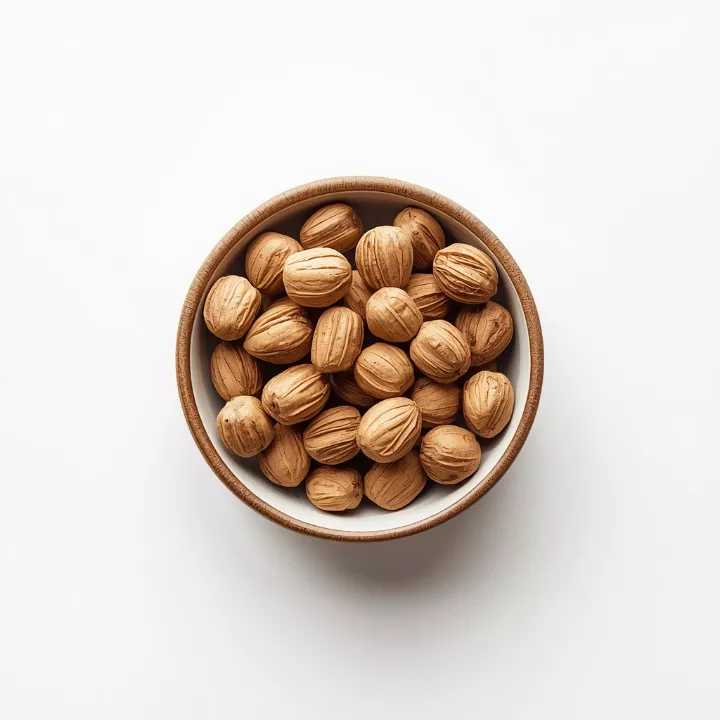
 h2>Are Brazil nuts good for you?

Brazil nuts can contribute useful nutrients to a healthy diet, but the answer is qualified rather than an unrestricted yes. Their unusually high and variable selenium content makes portion control important. While selenium is an essential mineral involved in thyroid-hormone metabolism, DNA synthesis, and protection from oxidative damage, relying on Brazil nuts as a primary source requires caution.
These nuts should be viewed as one optional component of a varied diet, not a treatment, supplement substitute, or uniquely necessary superfood. Meeting the body's requirement for selenium does not automatically translate into disease prevention or enhanced health beyond normal physiological function. While they offer nutritional value, their potential for exceeding safe intake limits means they must be consumed intentionally and in limited amounts.
What nutrients do Brazil nuts provide?
Brazil nuts are energy-dense, providing a concentrated source of calories along with substantial amounts of fat and protein. The majority of their fat is unsaturated, which aligns with general dietary recommendations for heart health, though they also contain a notable amount of saturated fat. They offer dietary fiber and essential minerals beyond selenium, including magnesium and phosphorus.
Selenium remains the standout nutrient. The National Institutes of Health (NIH) reference tables report an average of 544 micrograms of selenium in one ounce of Brazil nuts, which typically contains approximately six to eight nuts. This amount significantly exceeds the US Recommended Dietary Allowance (RDA) for adults, which is 55 mcg per day, and even covers the increased needs during pregnancy (60 mcg) or lactation (70 mcg).

Database serving values cannot establish the exact selenium content of an individual nut. The concentration of selenium in Brazil nuts varies widely based on geographic location, soil selenium levels and form, soil pH, and other growing conditions. While they are a potent source of this mineral, the actual amount consumed can fluctuate significantly depending on the specific batch and origin of the nuts.
Brazil Nuts: Key Facts and Safety
Why selenium is both their strength and their limitation
Selenium is an essential mineral that serves as a constituent of approximately 25 selenoproteins. These proteins play critical roles in thyroid-hormone metabolism, DNA synthesis, reproduction, and protection from oxidative damage and infection. Because these physiological functions are fundamental to human health, selenium qualifies as a vital nutrient that the body cannot produce on its own.
The presence of such high concentrations of this mineral is what makes Brazil nuts unique among tree nuts. This concentration is also their primary limitation. The amount of selenium absorbed by Brazil nut trees depends heavily on the soil in which they grow. Factors such as geographic location, soil pH, and the specific form and availability of selenium in the earth cause substantial variability in the final selenium content of the nuts.
Neither a database average nor a fixed nut count can reveal a person's exact selenium intake from a specific serving. One batch of Brazil nuts might provide barely any selenium, while another could contain massive amounts. This unpredictability means that eating Brazil nuts is an unreliable method for precise nutrient dosing.
Distinguish between meeting a nutrient requirement and gaining extra benefit through higher intake. While adequate selenium supports normal physiological function, evidence does not establish that consuming selenium-rich foods prevents or treats disease in the general population. For example, although the thyroid contains high selenium concentrations and the mineral is involved in its function, selenium supplementation has not been shown to prevent or treat thyroid disease in people who do not have a deficiency. Observational associations between selenium status and outcomes like cancer or cognitive decline do not establish causation, and randomized trials have not demonstrated that selenium supplements prevent broad categories of disease.
While Brazil nuts are an excellent way to ensure adequate selenium intake for those who struggle to meet requirements through other foods, they do not offer magic bullet effects beyond basic nutrient sufficiency. The strength of the nut lies in its ability to fill a nutritional gap; the limitation lies in the inability to control dosage and the lack of evidence for disease prevention beyond maintaining normal health.
What health benefits are reasonably supported?
Reasonable support for health benefits from Brazil nuts rests on the established biological functions of selenium rather than claims that the nuts prevent or treat specific diseases. Because selenium is a constituent of selenoproteins involved in thyroid-hormone metabolism, DNA synthesis, and protection from oxidative damage and infection, adequate intake supports these fundamental physiological processes. When dietary selenium is insufficient, consuming Brazil nuts can help restore normal function and prevent deficiency-related issues.
Evidence does not support the claim that Brazil nuts prevent or treat disease in populations with sufficient selenium status. Observational studies often find associations between higher selenium levels and lower risks of cardiovascular disease, cancer, or cognitive decline, but these associations do not prove causation. Randomized controlled trials of selenium supplementation have failed to demonstrate broad cancer prevention, and evidence remains insufficient to claim that selenium intake prevents heart disease or slows cognitive aging in the general population.
While the thyroid gland concentrates high levels of selenium and relies on it for hormone regulation, there is no clinical evidence that Brazil nuts prevent or treat thyroid disorders such as hypothyroidism or Hashimoto's disease in individuals who are not deficient. The nutrient supports normal thyroid function, but it does not act as a therapy for existing pathology.
Antioxidant properties are often cited as a benefit of selenium-rich foods because selenoproteins help mitigate oxidative stress. While this mechanism is biologically plausible and important for cellular health, converting this general antioxidant role into a claim that Brazil nuts reduce inflammation, improve mood, or treat infertility exceeds the current scientific evidence. The body benefits from adequate selenium to maintain normal repair and protection mechanisms, but consuming Brazil nuts does not provide extra protective effects beyond meeting nutritional requirements.
The primary health benefit of Brazil nuts is ensuring adequate selenium intake for those who might otherwise fall short. This support prevents deficiency and enables normal physiological function. Claims that they serve as a treatment or prevention strategy for chronic conditions like cancer, heart disease, or cognitive decline are not substantiated by rigorous clinical data and should be viewed with skepticism.
What does the cholesterol research actually show?
Research on Brazil nuts and heart health frequently references a small 2013 randomized crossover study, yet its findings are often overstated in popular nutrition advice. The trial enrolled only ten healthy adults aged 23 to 34 and tested single portions of 0, 5, 20, or 50 grams of Brazil nuts following washout periods. Investigators reported lower LDL cholesterol and higher HDL cholesterol after the larger portions, while total cholesterol and triglycerides did not significantly change.
These results do not establish that Brazil nuts reliably lower cholesterol or prevent heart disease in the broader population. The study was very short-term and involved a tiny sample size of healthy young adults who likely had normal lipid profiles to begin with. The findings cannot be generalized to people with existing dyslipidemia or cardiovascular risk factors.
The unusually rapid shifts in lipid profiles observed in this experiment require confirmation through larger, longer-duration trials. Even within the context of this specific study, the results do not establish a usual serving size, durable cardiovascular benefit, or treatment efficacy for clinical conditions. Total cholesterol and triglyceride levels remained stable, suggesting that the impact on overall heart health markers may be limited or highly variable.
Readers should interpret these findings as preliminary data from a controlled laboratory setting rather than proof that eating four nuts daily will improve personal health outcomes. The study does not support replacing prescribed cholesterol medication with Brazil nuts, nor does it prove that the nuts provide lasting protection against cardiovascular events outside of this specific experimental window.
How many Brazil nuts can you eat safely?
Determining a safe serving size requires understanding official intake guidelines, which distinguish between the amount needed for health and the absolute limit before toxicity occurs. In the United States, the tolerable upper intake level (UL) for selenium is set at 400 mcg per day for adults from all sources. This figure represents a ceiling rather than a recommended target; it is the maximum daily intake unlikely to cause adverse health effects over time.
Contextual guidance from the National Institutes of Health (NIH) estimates that a single Brazil nut may contain between 68 and 91 mcg of selenium. Based on this range, one or two nuts can provide ample selenium for most adults. Because individual nuts vary significantly in size and origin-derived concentration, this estimate is practical context rather than an exact universal dose.

The variability of selenium content makes fixed nut counts unreliable safety metrics. An average database value cannot establish the exact selenium content of a specific nut from a given batch. Neither a database serving value nor a standard count of four or five nuts can guarantee a safe intake level. Depending on the soil conditions where the trees grew, several average-sized nuts could approach or even exceed the 400 mcg upper limit.
Jurisdictional differences further complicate universal advice. The European Food Safety Authority (EFSA) established a lower adult UL of 255 mcg per day in 2023. Limits that might be considered safe in one region could potentially lead to excessive intake under guidelines from another. Readers should not apply US limits as global rules or assume that a nut count safe for adults is appropriate for children, whose tolerances differ.
Total daily selenium intake must account for all dietary sources. Brazil nuts contribute to the overall pool alongside other foods, beverages, and potential supplements. Because of this cumulative effect and the unpredictable selenium density of individual nuts, intentional portion control is necessary rather than casual, unlimited snacking.
Risks, allergies, and who should take extra care
Consuming Brazil nuts in excess can lead to selenium toxicity, known as selenosis. Chronic overconsumption typically presents with mild but noticeable symptoms, including garlic breath, a metallic taste, nausea, diarrhea, skin rashes, fatigue, irritability, and nervous system problems. Long-term exposure at these levels often results in brittle hair and nails or hair loss entirely.
Extremely high intake can trigger severe medical emergencies. Symptoms may include significant gastrointestinal distress, breathing difficulties, tremors, kidney failure, heart failure, heart attacks, and, in rare cases, death. These outcomes highlight why portion control is not merely a suggestion but a critical safety measure when consuming this specific nut.
Beyond selenium toxicity, Brazil nuts are a recognized allergen. The US Food and Drug Administration (FDA) classifies Brazil nuts as major food allergens for labeling purposes because exposure can cause serious or life-threatening reactions in susceptible individuals. People with a known tree-nut allergy must avoid Brazil nuts entirely and adhere to their established allergy action plans. Those with unknown sensitivities should exercise caution, particularly if they have allergies to other tree nuts, although cross-reactivity varies by individual.
Readers managing diagnosed medical conditions or taking selenium supplements should take extra care. Because total daily selenium intake includes contributions from all foods, beverages, and supplements, adding Brazil nuts without accounting for these other sources can rapidly push intake toward the upper limit. Individuals with thyroid disorders, kidney issues, or those on specific medications should consult a healthcare provider before incorporating Brazil nuts into their diet regularly. Professional guidance ensures that intake remains within safe bounds while addressing individual health needs.
Practical ways to include Brazil nuts in a balanced diet
Incorporating Brazil nuts into a daily meal plan works best when they are treated as a targeted supplement rather than a general snack food. Because their selenium content is both potent and unpredictable, deliberate portioning is more effective than eating freely from a large container. The goal is to contribute useful nutrients to a varied diet without exceeding safe intake limits or displacing other food groups.
A simple approach is to consume one or two nuts as a standalone item, perhaps paired with fruit or yogurt in the morning. This method makes it easy to track intake and ensures that the selenium contribution does not accumulate dangerously when combined with other dietary sources or multivitamins. Alternatively, chopped Brazil nuts can be used as a garnish for salads, oatmeal, or roasted vegetables. Their rich, buttery flavor complements savory and sweet dishes alike, allowing them to add texture and nutritional value in small, controlled amounts.
Mixing a few Brazil nuts with other varieties of nuts creates a blend that diversifies nutrient intake while diluting the selenium load from any single nut. This strategy supports the principle of eating a varied diet, which is generally more effective for overall health than relying on specific “superfoods” for disease prevention. It also mitigates the risk of accidental overconsumption by making Brazil nuts just one component of a larger serving.
Storage and preparation do not significantly alter the nutritional profile or safety concerns. Keeping nuts in a cool, dry place preserves their quality, though specific shelf-life claims should be avoided as they vary by product. There is no need to roast, soak, or process them for any claimed nutritional boost; raw or dry-roasted options retain their natural unsaturated fats and minerals.
Brazil nuts are optional. They offer a convenient way to meet selenium requirements for some individuals, but a balanced diet can supply this essential mineral from multiple foods, including seafood, whole grains, and eggs. For most people, the practical benefit lies in occasional, mindful inclusion rather than daily reliance.