
Should you eat a snack before bed?
A bedtime snack is optional, not a nightly requirement. If you are hungry after dinner, a light snack may be a practical choice. If you are not hungry, there is no need to add one simply because it is evening.
Hunger can be influenced by what and when you ate earlier, your usual routine, and personal preference. A snack is different from a substantial late meal. A large or heavy meal close to bedtime may feel uncomfortable and can interfere with settling down. Healthy sleep guidance from the National Heart, Lung, and Blood Institute allows for a light snack while advising people to avoid heavy or large meals within a few hours of bedtime.
The useful goal is therefore modest: choose something small enough to satisfy hunger without turning into a second dinner. A snack also does not serve as a treatment for insomnia or guarantee better sleep. If nighttime hunger happens often or is accompanied by other concerning symptoms, discuss it with a qualified healthcare professional rather than assuming a particular food will solve the problem.
What makes a good bedtime snack?
A good bedtime snack is simple, familiar, and light enough to fit comfortably into your routine. It can draw from several food groups, including fruit, vegetables, grains, dairy, fortified soy products, and protein foods. The USDA MyPlate framework includes foods such as eggs, nuts, seeds, beans, peas, lentils, soy products, milk, yogurt, and cheese among its food groups. It also emphasizes whole fruits and choosing whole grains for at least half of grain choices.
Pairing two foods can make a snack more satisfying and varied. Examples include fruit with nut butter, yogurt with berries, or whole-grain crackers with cheese. These are practical combinations that bring different types of foods together; they are not formulas proven to stabilize blood glucose overnight or increase melatonin.
Nutritional value and sleep evidence are separate questions. A snack may provide useful food-group variety without having been tested as a sleep intervention. A food may appear in a small sleep study without every version, serving, or preparation having the same effect. Choose options you enjoy, can prepare easily, and can eat comfortably. There is no single bedtime snack that everyone needs.
10 simple healthy snacks before bed
These ideas include sweet, savory, warm, and no-cook options. The serving descriptions are illustrative rather than prescribed portions or nutritional targets. Adjust the amount to your hunger and preferences.

-
Plain yogurt with berries
Spoon plain yogurt into a small bowl and add a handful of fresh or frozen berries. This is a no-cook option that combines a dairy food with fruit. If using a fortified soy yogurt, check the product label because plant-based alternatives are not all nutritionally equivalent to dairy.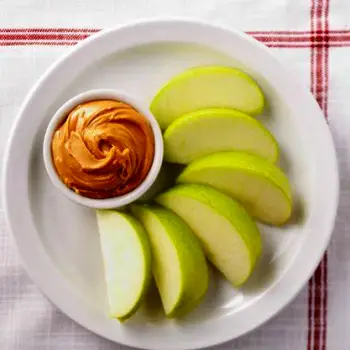
-
Banana or apple with nut butter
Slice a banana or apple and serve it with a small spoonful of peanut butter, almond butter, or another nut butter. The fruit provides a sweet element, while the nut butter adds a protein-food choice. Use a nut-free alternative if needed, and follow any allergy guidance relevant to your household. -
Oatmeal with milk or a suitable alternative
Prepare a small bowl of oatmeal with milk or a suitable fortified soy alternative. Add sliced fruit if desired. This warm option uses a grain food and can be made from plain oats without turning the snack into a large meal.
-
Whole-grain crackers with cheese
Serve a few whole-grain crackers with a modest amount of cheese. This savory combination is easy to assemble and includes a grain food and a dairy food. Choose the amount that feels like a snack rather than a full plate. -
Cottage cheese with fruit
Add a small serving of cottage cheese to a bowl with sliced peaches, berries, apple, or another fruit. The combination can be sweet without relying on dessert-style toppings. Cottage cheese is part of the dairy group. -
A small portion of nuts or seeds
Place a small portion of nuts or seeds in a bowl instead of eating directly from the container. This is a no-cook, portable option from the protein-food group. Because nuts and seeds are filling, a modest serving may be more suitable than a large handful for a late snack.
-
Whole-grain toast with hummus
Spread hummus on one piece of whole-grain toast. This savory choice combines a whole grain with a spread made from chickpeas, which are part of the beans, peas, and lentils category. Add cucumber or another vegetable if you want more texture. -
A cooked egg with whole-grain crackers
Pair one cooked egg with a few whole-grain crackers for a simple savory snack. Prepare the egg in advance or cook it when needed, following ordinary food-safety practices. This option uses an egg as a protein food and crackers as the grain component. -
Kiwi
Eat a kiwi on its own or slice it into a small bowl. It is a quick, no-cook fruit option. Research on kiwi and sleep has limitations, so choose it as a fruit snack rather than assuming it will improve sleep. -
Cooked edamame
Serve a small portion of cooked edamame, either on its own or with whole-grain crackers. Use an already cooked product or prepare frozen edamame according to its package directions; not every frozen product is ready to eat after thawing. Edamame is a soy-based protein food.


Can bedtime snacks actually help you sleep?
A nutritious snack idea is not automatically a clinically proven sleep intervention. Most of the options above are useful because they are familiar, easy to combine, and can provide food-group variety. They have not been established as treatments for insomnia.
Kiwi has been studied in adults with self-reported sleep problems. In a 2011 study, participants ate two kiwifruits one hour before bedtime for four weeks, and sleep measures improved from baseline. The study had no control group, so it cannot establish that kiwi caused the changes. The study also does not show that any serving of kiwi will produce the same result for every person.
Tart cherry juice has also been evaluated, but the findings do not support treating every cherry product or bedtime serving as a sleep aid. In a small randomized, double-blind crossover pilot study of older adults with insomnia, a tart cherry juice beverage was compared with a placebo over two-week treatment periods. Improvements were reported for some outcomes, including insomnia severity and wakefulness after sleep onset, but not for sleep latency, total sleep time, or sleep efficiency. The tested beverage and schedule cannot be generalized to all cherry products.
Dairy research is similarly limited. A systematic review of milk, dairy products, and sleep found possible relationships across varied observational and intervention studies, but differences and limitations between studies prevent treating yogurt, cheese, or warm milk as reliably proven sleep interventions. Nutrient content or biological plausibility alone does not establish that a food treats insomnia.
Portion size, timing, and foods that may interfere with sleep
Think of a bedtime snack as a light addition, not a second dinner. Descriptive portions-such as one piece of fruit, a small bowl of yogurt, or a few whole-grain crackers with cheese-are more useful than a universal calorie rule. A fixed ceiling such as 200 calories has not been established by this brief as a threshold that guarantees better sleep or prevents weight gain.
The same principle applies to timing. Healthy sleep guidance distinguishes between a light snack and a heavy or large meal close to bedtime. It advises avoiding heavy meals within a few hours of bedtime but does not impose one universal waiting period after every snack. How much you eat, how you feel afterward, and your usual routine all matter.
Caffeine deserves attention, including caffeine in chocolate. Alcohol can also interfere with the conditions that support healthy sleep, so sleep guidance advises avoiding alcoholic drinks before bed. Dark chocolate should not be treated as a sleep aid simply because it may be included in a snack; chocolate is also a caffeine source.
Reflux requires a separate consideration. For people who have GERD symptoms at night or when lying down, the National Institute of Diabetes and Digestive and Kidney Diseases advises eating meals at least three hours before lying down or going to bed. Foods and drinks associated with symptoms can include acidic foods, alcohol, chocolate, caffeine, high-fat foods, mint, and spicy foods, but individual triggers vary. This guidance is not a universal rule for every reader or every light snack.
Make bedtime snacking work for your routine
A simple decision sequence can keep bedtime snacking practical:
- Decide whether you are actually hungry or simply following a habit. A snack does not need to be eaten every night.
- Choose one appealing, familiar option that takes little preparation.
- Serve a light amount rather than building a second dinner.
- Eat it in a way that feels comfortable for your routine, while avoiding foods or drinks that you know interfere with your sleep or trigger symptoms.
- Keep a few basic ingredients available so the choice does not require much planning.
Useful staples might include yogurt, fruit, whole-grain crackers, oats, cheese, hummus, nuts, seeds, and eggs. Nuts or seeds can be portioned into small containers, and fruit can be kept where it is easy to see. Prepare edamame or other packaged foods according to their instructions rather than assuming every product has the same preparation requirements.
The best option is one that satisfies hunger without making the evening more complicated. A convenient snack may support a comfortable routine, but improved sleep is not guaranteed. If you are not hungry, skipping the snack is also a reasonable choice.