
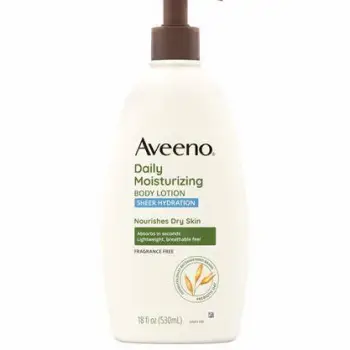
 h2>Body oil vs lotion: the main differences
Body oil and body lotion differ mainly in formulation. A typical body lotion is a fluid emulsion, meaning it contains both water and oils blended into one product. A conventional body oil is primarily oil-based. That difference affects how the product feels, spreads, and sits on the skin, but it does not mean only one category can moisturize.
Both can qualify as moisturizers because moisturizing is not limited to 'adding water.' Moisturizers may include ingredients that soften the skin, ingredients that reduce water loss, and ingredients that attract water. These roles can overlap in one formula. A lotion can contain water and still include ingredients that help reduce moisture loss. An oil can soften the skin and may help reduce water loss even though it does not supply water itself.
The common shortcut that 'lotion hydrates and oil seals' is too simple. It can be useful as a rough way to think about some products, but it leaves out what many formulas actually contain. Some lotions include occlusive or emollient ingredients, while oils can function as moisturizers rather than just as a final sealing step.
Category names are also imperfect. 'Body oil,' 'lotion,' 'milk,' or 'moisturizer' are marketing terms, not guarantees of identical composition across products. The ingredient profile and how your skin responds matter more than the label alone. Neither oil nor lotion is a universal winner; the better choice depends on the formula, the skin area, your tolerance, and the kind of dryness or discomfort you are trying to address.
How oils and lotions help skin retain moisture
Moisturizers support the skin's outer layers through three main types of functions: humectant, emollient, and occlusive. A humectant attracts water; glycerin is a common example. An emollient helps soften and smooth the skin surface. An occlusive reduces water loss from the skin; petrolatum is a classic example.
These categories are not mutually exclusive. A single lotion may contain water, a humectant such as glycerin, oils or other emollients, and occlusive ingredients. That is why a lotion should not be described as only 'adding water.' It may also help soften the skin and reduce moisture loss, depending on the finished formula.
Body oils work differently from water-containing lotions, but that does not make them non-moisturizing. Oils can act as emollients and may contribute to reducing water loss. Their occlusive effect varies by ingredient, so 'oil' is not a single performance category. An oil-based moisturizer also does not need to supply water directly to help maintain skin hydration; reducing water loss and softening the surface can still be part of a moisturizing effect.
Exaggerated penetration claims. Moisturizers mainly act on the skin's outer layers. A body lotion is not automatically a deep hydrator, and a botanical oil does not automatically rebuild the skin barrier because it is natural. The most accurate question is not whether the product is an oil or a lotion, but which moisturizing functions the formula provides.
Choosing for dry, sensitive, or acne-prone skin
For dry skin, either a lotion or body oil may feel helpful if the formula suits your skin. The choice should be guided by the severity of dryness and how well the product reduces tightness, roughness, or flaking without causing irritation. If dryness is more substantial, a cream or ointment may be more appropriate than either product in this comparison. Dermatology guidance for dry skin favors creams or ointments over lotions because they can be more effective and less irritating.
Sensitive skin shifts the focus toward tolerability. Fragrance-free products are generally preferred for dry, sensitive skin. 'Fragrance-free' is not the same as 'unscented'; unscented products may still contain ingredients added to mask other odors, and those ingredients can irritate some people. Natural oils are not automatically gentler, and a familiar or plant-based ingredient can still be poorly tolerated by an individual.
For acne-prone areas, labels such as oil-free, noncomedogenic, or 'won't clog pores' can be useful selection cues. They do not guarantee that a product will never trigger breakouts, but they are more relevant than assuming all oils cause acne or all lotions are safe for acne-prone skin. Some formulations can contribute to acne-like problems or folliculitis in susceptible areas, while others may be well tolerated.
Different body areas may need different products. A richer product might be acceptable on very dry legs but feel wrong on the chest, back, or other acne-prone areas. Selection is less about assigning one product category to a skin type and more about matching the formula to the concern and location.
Body Oil vs Lotion: What Really Matters
Texture, finish, and seasonal preferences
Texture and finish matter because they affect whether you will use a product consistently, but they are not proof of moisturizing effectiveness. A body oil may leave a sheen or slick feel, while a lotion may feel more fluid or less shiny, yet those experiences vary by formula. Some products spread easily and leave little residue; others feel richer or more noticeable on the skin. None of those traits alone proves how well the product reduces dryness.
Practical details can still influence the choice. If a product leaves residue that makes dressing uncomfortable, you may be less likely to use it. If you like a glossy finish, an oil may be appealing. If you prefer a less shiny feel, a lotion or another moisturizer may fit better. These are preference factors, not reliable measures of hydration.
Seasonal advice should also be kept in perspective. Low humidity and indoor heating can contribute to dry skin, so some people need a more effective moisturizing routine during colder or drier periods. That does not create a fixed rule that oil is for winter, lotion is for summer, or the reverse. Climate, indoor environment, bathing habits, clothing, and skin tolerance all affect what feels adequate.
A product can feel rich without meeting your skin's moisturizing needs, and a lighter-feeling formula may be enough for some people. The useful distinction is between cosmetic feel and skin response. Shine, slip, or quick comfort may be pleasant, but persistent dryness suggests the routine may not be sufficient.
Using body oil and lotion alone or together
A single suitable moisturizer can be enough. If a lotion, oil, cream, or ointment keeps your skin comfortable and does not cause irritation or breakouts, there is no automatic need to buy or layer multiple products. The product's formula and your skin's response matter more than building a longer routine.
Application timing can make a difference. Dermatology guidance recommends applying moisturizer immediately after bathing while the skin is still damp. This applies broadly to moisturizers, not only to one product category. The goal is to support the skin after water exposure, when dryness can become more noticeable.

Layering lotion and oil is optional. The usual rationale for applying lotion first and oil afterward is formulation-based: a water-containing lotion may provide humectants and emollients, while an added oil layer may contribute more emollient or occlusive effect. That does not prove the combination is clinically superior for everyone, and it is not a requirement. It may also feel too slick or heavy for some people.
Body oil can replace lotion for some people because oil can function as a moisturizer. The limitation is that an oil-based product is not identical to a water-containing lotion that includes humectants such as glycerin. If your skin does better with a formula that attracts water as well as softens and reduces water loss, a lotion or another moisturizer may be a better fit. Separate application is easier to judge than homemade mixing, because the finished products were formulated to be used as sold.
Irritation, limitations, and when to seek advice
Moisturizers are generally used to reduce dryness and improve comfort, but they can still cause problems. Some products may irritate the skin, trigger contact allergy, or contribute to folliculitis. Acne-prone areas may also react poorly to certain formulations. This does not mean every body oil clogs pores or every lotion is safer; it means individual ingredients and the finished formula matter.
Fragrance is a common practical issue for dry or sensitive skin. Fragrance-free products are preferred in that context, while 'unscented' does not necessarily mean free of potentially irritating masking ingredients. If a product repeatedly stings, itches, or seems to worsen the area where it is applied, it is reasonable to stop relying on that product and consider a simpler alternative.
Cosmetic softness and shine also have limits. A body oil or lotion may make skin look smoother temporarily, but that does not establish that it treats stretch marks, cellulite, pigmentation, or inflammatory skin disease. Moisturizers can support comfort and reduce dryness, but they should not be treated as substitutes for medical care when a skin problem needs assessment.
Persistent dryness despite routine measures deserves professional advice rather than simply adding more cosmetic products. A dermatologist can assess whether the dryness reflects an underlying skin condition, irritation from products, or a need for a different type of care.